Failure feels personal. But Theodore Roosevelt, the 26th President of the United States, saw it differently. He believed failure was proof that someone was actually trying.
This guide collects most honest Theodore Roosevelt quotes about failure, effort, and courage, plus the story behind each one, so you know exactly where it came from.
Table of Contents
The Man in the Arena: Roosevelt’s Most Famous Quote
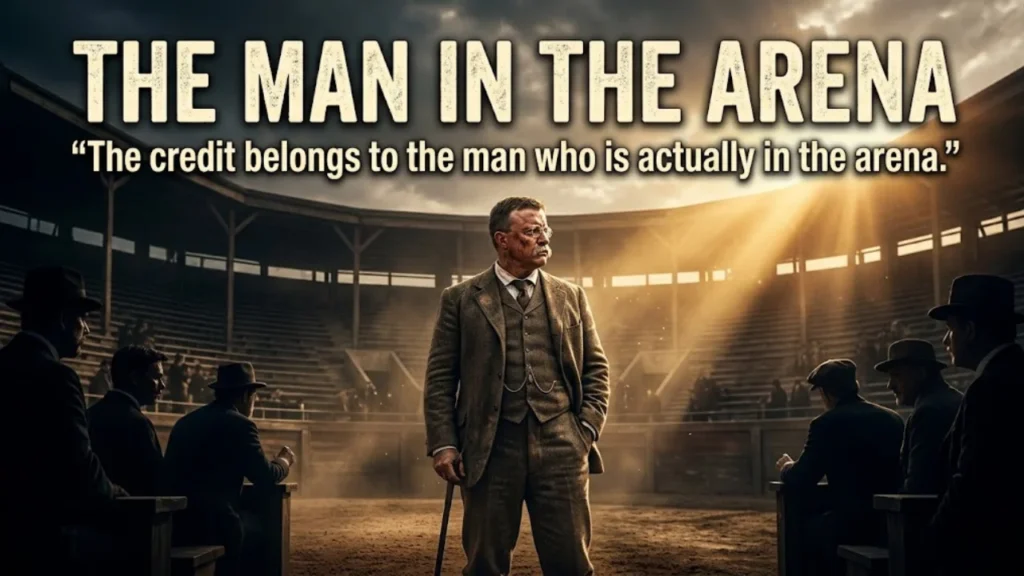
This is the one line almost everyone recognizes, even if they don’t know where it came from.
Roosevelt delivered it during a speech called “Citizenship in a Republic,” given at the Sorbonne in Paris on April 23, 1910. People now just call it “The Man in the Arena.”
It is not the critic who counts; not the man who points out how the strong man stumbles, or where the doer of deeds could have done them better. The credit belongs to the man who is actually in the arena, whose face is marred by dust and sweat and blood; who strives valiantly; who errs, who comes short again and again, because there is no effort without error and shortcoming; but who does actually strive to do the deeds; who knows great enthusiasms, the great devotions; who spends himself in a worthy cause; who at the best knows in the end the triumph of high achievement, and who at the worst, if he fails, at least fails while daring greatly, so that his place shall never be with those cold and timid souls who neither know victory nor defeat.
The message is simple. Critics who sit on the sidelines don’t matter. Only the person actually trying, actually risking failure, deserves the credit.
Richard Nixon quoted this exact passage in his 1974 resignation speech. That’s how deeply it has embedded itself into American public life.
Must Visit: Theodore Roosevelt Quotes About Change: 115+ Powerful Lessons to Embrace Growth & Transformation
Theodore Roosevelt Quotes About Failure
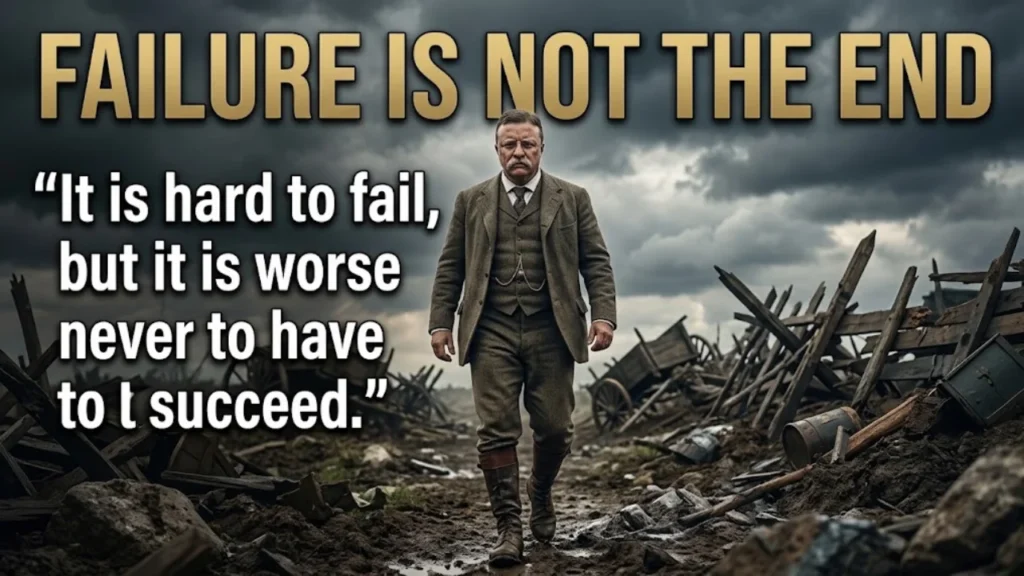
Here is the full working collection, pulled from his speeches, books, and recorded remarks. Each one stands alone as a lesson.
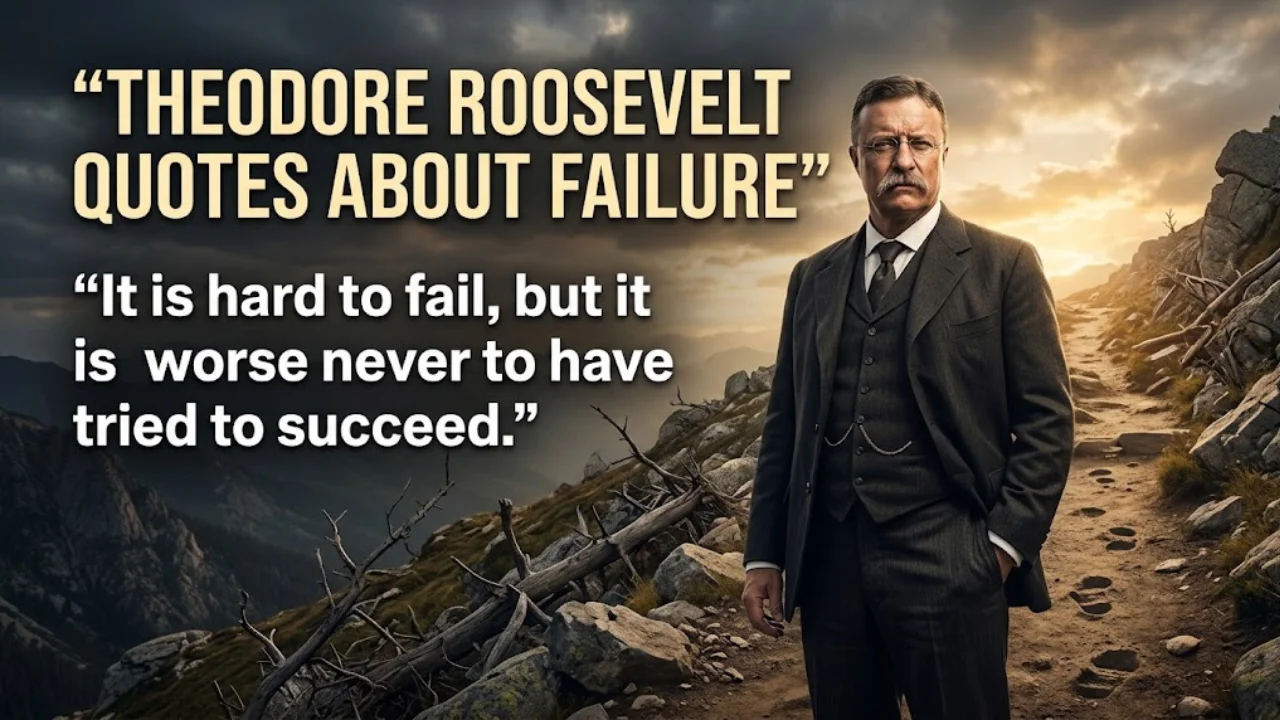
It is hard to fail, but it is worse never to have tried to succeed. In this life we get nothing save by effort.
Far better it is to dare mighty things, to win glorious triumphs, even though checkered by failure, than to take rank with those poor spirits who neither enjoy much nor suffer much, because they live in the gray twilight that knows neither victory nor defeat.
The only man who never makes mistakes is the man who never does anything.
The boy who is going to make a great man must not make up his mind merely to overcome a thousand obstacles, but to win in spite of a thousand repulses and defeats.
Nothing in the world is worth having or worth doing unless it means effort, pain, difficulty. I have never in my life envied a human being who led an easy life. I have envied a great many people who led difficult lives and led them well.
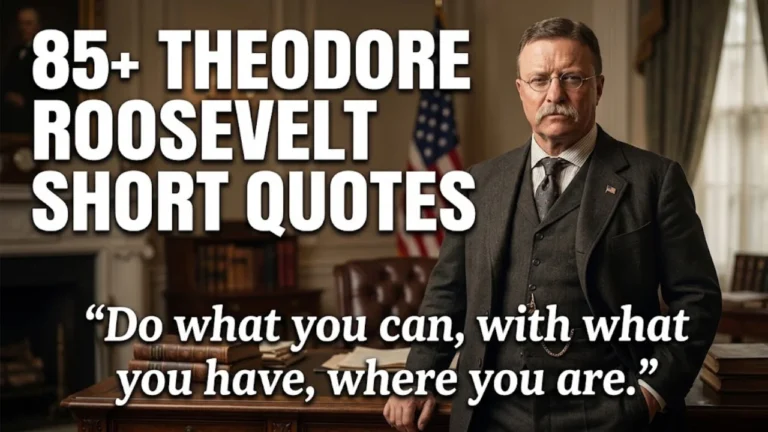
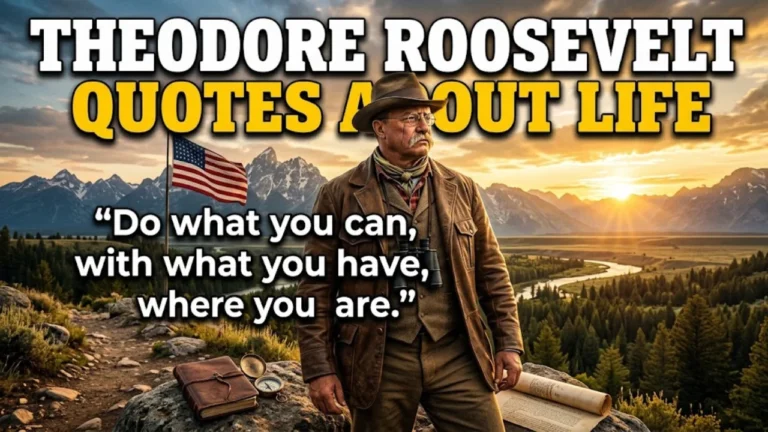
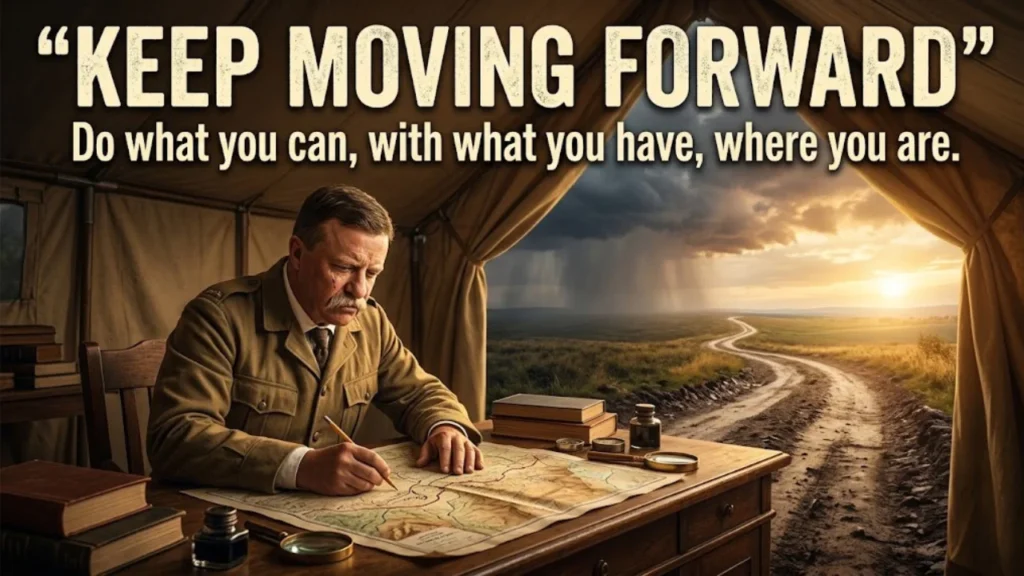
Do what you can, with what you have, where you are.
Believe you can and you’re halfway there.
When you’re at the end of your rope, tie a knot and hold on.
In any moment of decision, the best thing you can do is the right thing. The worst thing you can do is nothing.
Courage is not having the strength to go on; it is going on when you don’t have the strength.
Whenever you are asked if you can do a job, tell them certainly I can. Then get busy and find out how to do it.
Never throughout history has a man who lived a life of ease left a name worth remembering.
Knowing what’s right doesn’t mean much unless you do what’s right.
People don’t care how much you know until they know how much you care.
To educate a person in the mind but not in morals is to educate a menace to society.
How to Apply Roosevelt’s Lessons on Failure
Reading these quotes is easy. Using them is the actual work.
Start by naming the critics in your own head. Roosevelt’s arena idea works because it separates people who act from people who only comment. When you catch yourself hesitating out of fear of judgment, ask whether the judgment is coming from someone actually doing the thing.
Next, redefine what a failed attempt means. Roosevelt didn’t call failure the opposite of success. He called it evidence of effort. A rejected pitch, a missed goal, a business that didn’t work out, these are proof you were in the arena, not proof you don’t belong there.
Finally, keep moving. His line about tying a knot at the end of your rope isn’t poetic filler. It’s a practical instruction: when you run out of options, hold your position and wait for the next opening instead of quitting outright.
FAQs
What was Theodore Roosevelt’s most famous quote?
His most famous quote is the “Man in the Arena” passage from his 1910 speech “Citizenship in a Republic.” It centers on the idea that credit belongs to the person actually trying, not the critic watching from the sidelines.
Who said, “If you fail, fail while daring greatly”?
Theodore Roosevelt said this. It comes from the same “Man in the Arena” passage, where he says a person should “fail while daring greatly” rather than live safely and avoid both victory and defeat.
What did Einstein say about failing?
Albert Einstein is widely credited with saying, “A person who never made a mistake never tried anything new.” This idea closely mirrors Roosevelt’s own line that the only man who never makes mistakes is the man who never does anything.
What was Theodore Roosevelt’s most famous quote about leadership?
His best-known leadership quote is “Do what you can, with what you have, where you are.” It’s a short, practical statement often used in business and coaching settings because it applies to almost any situation.
Conclusion
Roosevelt’s words hold up because he wasn’t describing a strategy. He was describing a life he actually lived, sickness, personal loss, political defeat, and physical danger, followed by real achievement. His central idea is simple: dare mighty things. Failure is not something to avoid. It’s something to walk through.

Vicky ABROY is a writer, editorial curator, and lead researcher for AmericansQuotes.com. With a deep appreciation for the power of language, Vicky specializes in documenting, analyzing, and contextualizing iconic American speeches, literary excerpts, and historical quotations. Through meticulous research and engaging commentary, Vicky highlights the voices that have defined American thought, culture, and leadership across generations—helping readers discover the timeless wisdom hidden within famous words.